
The actor Idris Elba faceid incident, refers to a viral, unverified clip suggesting a wax figure matched a phone’s facial unlock, underscoring presentation attack risks; mitigate by enabling liveness/attention checks and 3D depth/IR sensors, storing templates in secure enclaves, tuning thresholds for low FAR, and pairing biometrics with MFA for sensitive actions.
Idris Elba faceid incident blew up my feed, and for good reason. A wax twin unlocked a phone—so what does that mean for your security? I’ll unpack the risks and the smart defenses without scare tactics.
Idris Elba incident
The so-called Idris Elba incident spread online as a short demonstration suggesting that a lifelike wax figure could unlock a smartphone using face recognition. Although details were thin and independent verification was missing, the clip spotlighted facial recognition vulnerabilities and the broader risk of biometric spoofing. Rather than celebrity intrigue, the useful takeaway is how presentation attacks might pressure consumer devices when conditions align.
What appears to be at stake
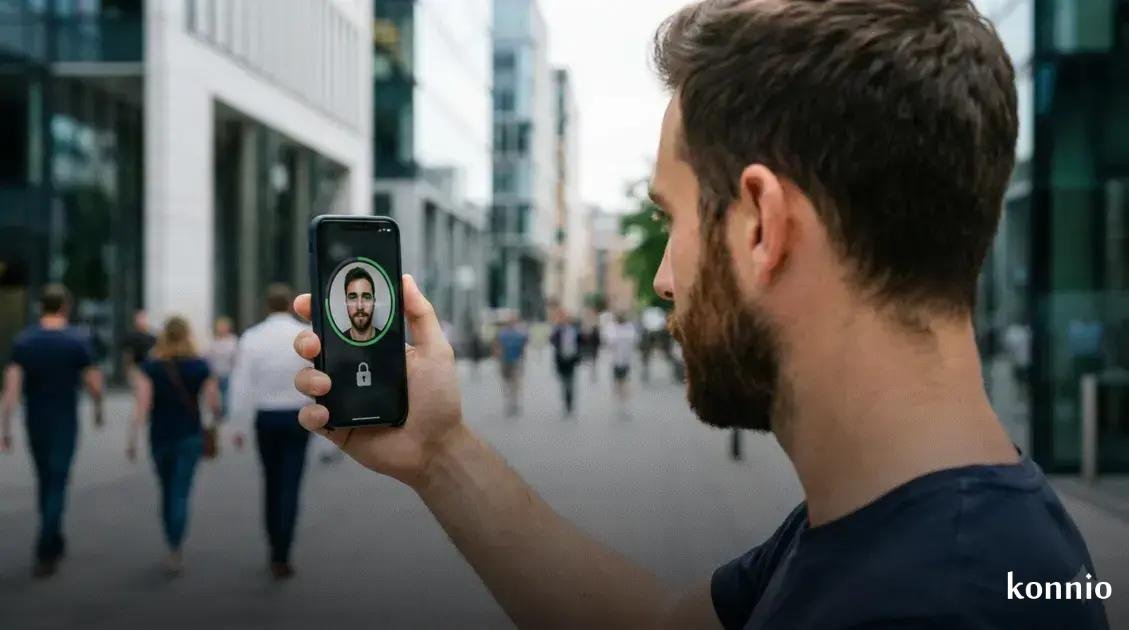
Modern systems rely on infrared sensors and 3D depth mapping to capture facial structure, then perform feature extraction and matching against a protected template. Many add liveness detection and Presentation Attack Detection (PAD) to spot artifacts like flat photos, masks, or wax skins. Even so, every matcher works with a confidence threshold, balancing convenience and security, which is why vendors publish a False Acceptance Rate (FAR) rather than promising impossibility.
Testing conditions and limitations
Demonstrations in wax museums, including venues like Madame Tussauds, make for compelling visuals but rarely disclose lighting, angles, distance, retries, or whether settings such as “require attention” were enabled. Materials like wax reflect IR differently, and a depth sensor might register partial geometry that, under a permissive threshold, edges past acceptance. Without peer-reviewed testing and device logs, such clips remain anecdotal signals rather than conclusive evidence.
It also matters how the template was enrolled and protected. A strong pipeline pairs anti-spoofing algorithms with biometric template protection in a secure enclave or Hardware Security Module (HSM)-like component, preventing raw facial data from leaving the device and reducing exposure to identity theft. If the template was captured in poor conditions, or if an alternate appearance was added that resembles a wax twin, the decision boundary can shift, increasing the odds of a borderline match.
For practical risk management, users and organizations should reinforce Identity and Access Management with Multi-Factor Authentication (MFA), especially for sensitive apps and enterprise contexts. Enable attention and liveness checks, keep OS and firmware updated, and require a passcode after restarts or policy-defined timeouts. High-assurance deployments benefit from multimodal biometrics and enterprise security standards that mandate PAD testing, aligning with 2026 AI security trends aimed at stronger spoof resistance and better data privacy across consumer-grade sensors.
How biometric authentication works?
Biometric authentication verifies that a live person matches an enrolled identity by comparing a new sample to a stored template. It can use physical biometrics such as face, fingerprint, or iris, and sometimes behavioral biometrics like typing rhythm or gait. The flow is consistent: capture, process, extract features, protect the template, and perform a match under a chosen confidence level.
Capture and preprocessing
Capture begins with sensors tuned to the modality. Face systems often combine visible light with infrared sensors for better contrast and 3D depth mapping, while fingerprint readers may be capacitive or ultrasonic to read ridge detail through skin and moisture. Preprocessing normalizes scale, orientation, and lighting, suppresses noise, and prepares the signal for robust comparison across sessions and environments.
During capture, modern devices perform Liveness Detection and Presentation Attack Detection (PAD) to resist biometric spoofing. These checks look for cues that indicate a live source, such as micro-movements, depth, heat, or optical flow patterns, and they flag fakes like photos, masks, or 3D prints. PAD lowers risk but is probabilistic, and its effectiveness depends on sensor quality, ambient conditions, and the strength of the anti-spoofing algorithms.
Feature extraction and template protection
After preprocessing, the system performs feature extraction to build a compact mathematical representation of the sample. Instead of storing raw images, it saves a protected biometric template that captures stable traits. Some implementations derive a mathematical hash or use helper data schemes so the template is non-invertible, reducing exposure even if an attacker gains partial access.
Security architecture matters as much as algorithms. Strong designs keep templates inside a secure enclave or Hardware Security Module (HSM)-class component, enforce rate limits, and isolate cryptographic operations. This aligns with enterprise security standards and modern Identity and Access Management practices, helping prevent identity theft through template theft or replay.
Matching, thresholds, and policy
Matching compares the live features to the enrolled template and outputs a similarity score. A configurable confidence threshold decides acceptance or rejection, trading off convenience against security. Operators watch metrics like False Acceptance Rate (FAR) and false rejection to tune that threshold for context, from consumer-grade sensors to controlled enterprise access points.
Policy completes the picture. High-risk actions should enable Multi-Factor Authentication (MFA) and, when available, multimodal biometrics that blend face with fingerprint or iris to improve resilience. Together with on-device template storage, privacy controls, and continuous updates, these measures reflect 2026 AI security trends aimed at stronger PAD coverage, lower matching error, and better data privacy across platforms.
Biometric classes
Biometric classes are often grouped into physical biometrics and behavioral biometrics, with a growing set of soft or contextual traits that assist rather than authenticate alone. Physical traits, such as face, fingerprint, and iris, emphasize permanence and distinctive structure, while behavioral traits, like typing cadence and swipe dynamics, rely on patterns that evolve over time. Each class demands different sensors, feature extraction methods, and protections to keep attacks and drift in check.
Physiological traits and sensing
Face, fingerprint, and iris systems lean on dedicated hardware to capture reliable signals. Face authentication often blends visible light with infrared sensors and 3D depth mapping to model geometry and texture, while fingerprint readers use capacitive or ultrasonic imaging to resolve ridge detail. These pipelines add Liveness Detection and Presentation Attack Detection to reduce biometric spoofing, but performance still depends on ambient conditions, anti-spoofing algorithms, and the chosen confidence threshold. Misconfigurations or weak optics can raise False Acceptance Rate (FAR) and expose facial recognition vulnerabilities.
Behavioral signals and drift
Behavioral biometrics look for stable patterns in motion, rhythm, or voice prosody and often enable continuous checks after login. Keystroke dynamics, pointer travel, and mobile grip patterns add a low-friction layer that adapts to user context. Because behavior changes with fatigue, injury, or device, these systems must handle natural variation while resisting replay. Robust models use temporal features, device entropy, and PAD-like cues to distinguish live interaction from scripted automation.
Fusion strategies and policy
Multimodal biometrics combine classes to balance strengths, fusing signals at feature, score, or decision levels. A face template can be paired with a fingerprint or iris to harden access without adding much friction, and policy can elevate assurance with Multi-Factor Authentication (MFA) for sensitive actions. In Identity and Access Management, thresholds and fusion weights are tuned to context, acknowledging that consumer-grade sensors may need stricter gating than controlled entry points governed by enterprise security standards.
Template security and privacy
Regardless of class, the reference is never the raw image but a protected biometric template. Systems derive compact vectors and may apply a mathematical hash or cancellable-transformation scheme so compromised templates can be rotated. High-assurance designs keep secrets inside a secure enclave or Hardware Security Module (HSM), rate-limit queries, and bind templates to device and user context to deter identity theft. Sound engineering pairs encryption with data privacy controls such as on-device matching and strict minimization.
Evaluation and emerging trends
Comparing biometric classes requires standardized testing: PAD benchmarks for masks and replays, operating curves that track FAR and false rejection, and audits for storage security. As 2026 AI security trends unfold, expect stronger synthetic-media detection, better domain adaptation for changing environments, and richer template protection schemes that preserve utility while tightening privacy. Across classes, the goal is consistent: resilient capture, robust matching, and policy that aligns risk with the realities of sensors and attacks.
Should I keep believing on Biometrics?
Trust in biometrics works best when it is framed as conditional confidence rather than blind faith. These systems compare a live sample with an enrolled template and accept or reject based on a probability score. Settings like the confidence threshold and the measured False Acceptance Rate (FAR) define how forgiving the decision is, which means outcomes depend on sensors, lighting, user behavior, and policy choices.
Where biometrics excel
Modern devices perform on-device matching and keep the biometric template sealed in a secure enclave or Hardware Security Module (HSM)-class component. This design limits exposure by never releasing raw images and by isolating cryptographic keys. Face systems add infrared and 3D depth mapping to capture structure, while fingerprints use capacitive or ultrasonic imaging to read fine texture. Speed, convenience, and tamper-resistant storage make biometrics a strong first factor for everyday use.
Where biometrics need help
Even with Liveness Detection and Presentation Attack Detection, some setups can be strained by masks, high-quality replicas, or unusual lighting. Consumer-grade sensors vary in optics and processing power, which can raise error rates in edge conditions and surface facial recognition vulnerabilities. If template protection is weak or if backups are mishandled, attackers could pursue identity theft via replay or database leakage, underscoring the need for robust biometric template protection.
Risk controls that matter
Policy is the lever that keeps trust grounded. Pair biometrics with Multi-Factor Authentication (MFA) for high-value actions, enforce attention checks, and require a passcode after restarts or policy-driven timeouts. In Identity and Access Management, tune thresholds to context, set rate limits, and favor multimodal biometrics when assurance must be high. Enterprise rollouts should follow enterprise security standards for PAD testing, firmware integrity, and ongoing monitoring that keeps FAR within acceptable bounds.
Privacy and resilience advance together when data stays on-device, when templates use cancellable transforms or a mathematical hash-based helper scheme, and when software updates bring stronger anti-spoofing algorithms. Looking to 2026 AI security trends, expect improved synthetic-media detection, adaptive PAD tailored to consumer-grade sensors, and clearer data privacy controls that give users transparency and revocation options without weakening protection. With these guardrails, biometric trust becomes a managed, evidence-based posture instead of an absolute claim.
What’s the best authentication for my project?
Selecting the best authentication is a matter of aligning assurance with real-world risk, user expectations, and device capabilities. A strong baseline favors phishing-resistant methods that minimize shared secrets and reduce support overhead. The goal is to secure high-value actions with the least friction possible while maintaining measurable controls within your Identity and Access Management program.
Project factors that drive choice
Audience and environment shape the decision more than any single technology. Consumer apps with diverse hardware benefit from methods that work offline and across platforms, while enterprise rollouts can standardize on managed devices and policy. Regulatory duties and data privacy constraints may restrict server-side biometrics or mandate local processing, audit trails, and short retention windows. Consider help-desk load, recovery paths, and the drop-off cost of each extra step.
Threat modeling should be explicit. If account takeover pressure is high, prioritize Multi-Factor Authentication (MFA) with device-bound credentials and step-up prompts for sensitive flows like payments or key rotations. Shared terminals and kiosk use push you toward possession-based tokens and ephemeral sessions, whereas personal devices enable platform authenticators and on-device biometrics without exposing raw signals to your servers.
Method fit by assurance level
For low-risk interactions, passwordless options such as passkeys (FIDO2/WebAuthn) reduce phishing and reuse while improving conversion, and can be paired with risk-based checks to avoid unnecessary friction. Medium-risk scenarios often blend passkeys with app-based approvals or device-bound push challenges to resist replay. High-risk access favors hardware-backed keys with attestation, enforced reauthentication, and step-up MFA on policy triggers like new devices, unusual geography, or elevated privileges.
Recovery must match the assurance of the primary factor. Replace SMS with safer routes such as verified device transfer, admin-assisted recovery with strong proofing, or single-use codes stored offline. Track authentication KPIs alongside security metrics to tune the balance: success rates, time to authenticate, abandonment, and account takeover trends inform whether thresholds and prompts are calibrated correctly.
Using biometrics safely and effectively
On-device biometrics unlock cryptographic keys rather than becoming the credential themselves. Modern phones and laptops keep the biometric template sealed in a secure enclave or Hardware Security Module (HSM)-class component, never sharing raw images. Face authentication adds infrared sensors, 3D depth mapping, and Liveness Detection/Presentation Attack Detection to resist biometric spoofing, but acceptance still depends on a confidence threshold and measured False Acceptance Rate (FAR).
When assurance must be higher or sensors are consumer-grade, pair biometrics with possession factors and, if needed, multimodal biometrics. Follow enterprise security standards that require PAD testing and ongoing vendor evaluation, and ensure biometric template protection and cryptographic isolation are validated. For server-side programs that handle any biometric-derived data, bind storage to HSMs, rate-limit match attempts, and document retention and consent to keep pace with 2026 AI security trends and evolving privacy law.
Key takeaways on idris elba faceid and biometric security
The viral wax-figure moment is a reminder that biometrics are probabilistic, not magic. Liveness detection, 3D depth mapping, and infrared sensors raise the bar, but outcomes still depend on confidence thresholds, environment, and the system’s measured FAR.
Strong designs keep the biometric template on-device in a secure enclave or HSM-class component, apply biometric template protection, and minimize data sharing. This reduces exposure to identity theft while improving data privacy and resilience.
For sensitive actions, pair biometrics with MFA and consider multimodal biometrics. Enforce attention checks, rate limits, and step-up prompts within a clear Identity and Access Management policy tuned to your risk and user base.
Validate assumptions with real-world testing: vary lighting, angles, and devices; monitor error rates; and update anti-spoofing algorithms. Align vendor choices with enterprise security standards and document recovery paths that match your assurance level.
Looking ahead, 2026 AI security trends point to stronger synthetic-media detection and privacy-first architectures. Treat biometrics as a fast, user-friendly gate that unlocks hardware-backed credentials—then layer controls to keep convenience and security in balance.

Leave a Reply